Choose a paper bag from the finished item that will go inside it. For most custom shopping bags, record dimensions as width × gusset × height, then add practical clearance so the product box can be packed without scraping the bag or forcing the side folds.
There is no single universal paper bag size chart for every supplier and bag style. The examples below are starting points for planning. Your final dimensions should come from the product box, packed weight, handle position and the way the bag will be used.
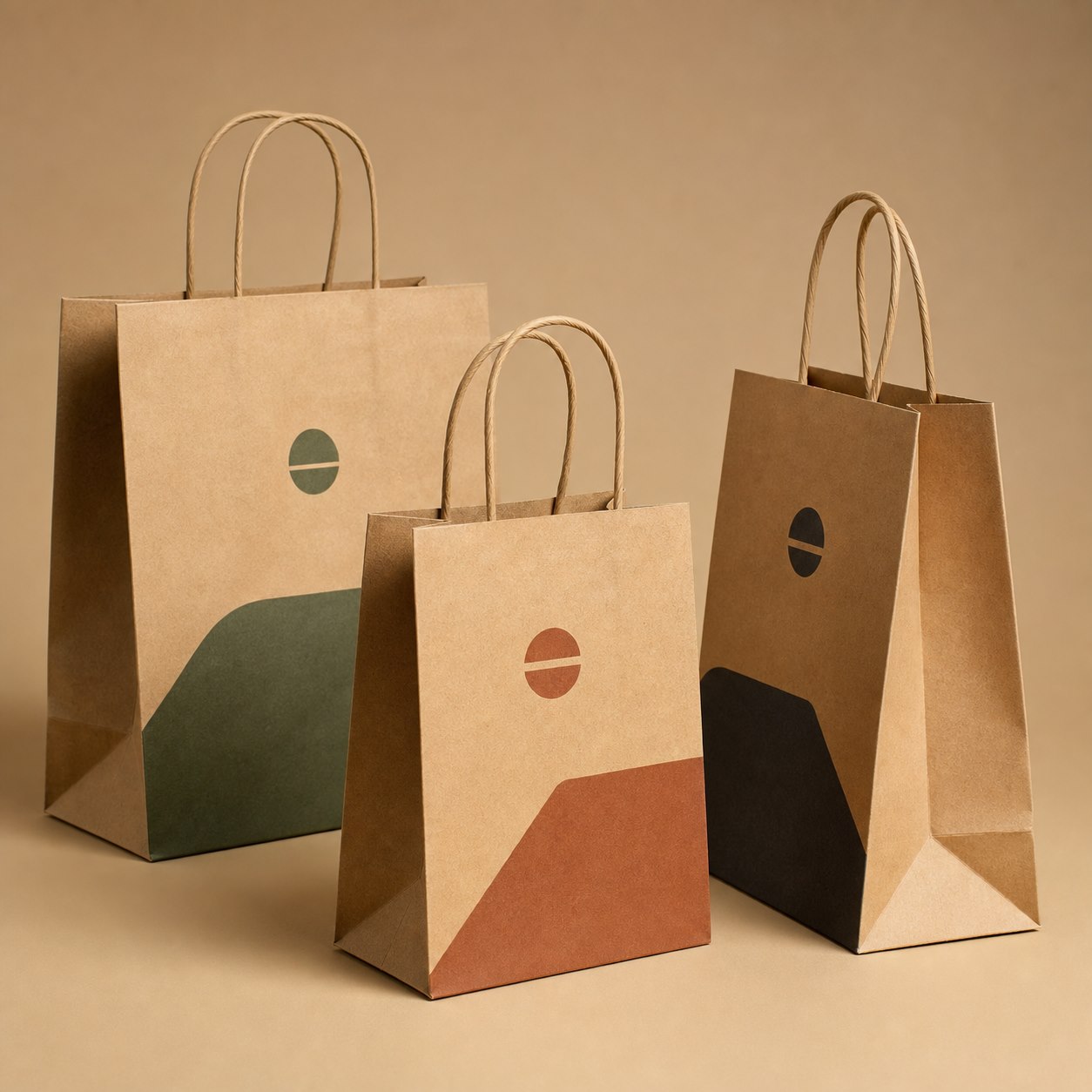
Paper bag size chart
These example sizes help you discuss proportions with a supplier. They are not fixed stock sizes or a promise that every product in the example column will fit.
| Planning size | Width × gusset × height | Approx. inches | Common starting use |
|---|---|---|---|
| Small | 180 × 80 × 230 mm | 7.1 × 3.1 × 9.1 in | Jewelry boxes, candles or small skincare cartons |
| Medium | 250 × 100 × 300 mm | 9.8 × 3.9 × 11.8 in | Cosmetics, folded apparel or medium gift boxes |
| Large | 330 × 130 × 400 mm | 13 × 5.1 × 15.7 in | Rigid gift boxes, footwear or multi-product sets |
| Wide gift bag | 360 × 140 × 300 mm | 14.2 × 5.5 × 11.8 in | Wide presentation boxes and horizontal gift sets |
Custom bags can be made between and beyond these examples. The right answer is the smallest practical bag that accepts the finished pack comfortably and still looks intentional.
How to read paper bag dimensions
Suppliers may write dimensions in a different order, so confirm the order in words on the quote and dieline.
| Measurement | What it means | What to check |
|---|---|---|
| Width | Left-to-right measurement across the front panel | Must accept the product box width plus clearance |
| Gusset or depth | Side fold that opens to create bag depth | Must be deeper than the finished box depth |
| Height | Bottom-to-top measurement of the bag body | Must cover the box without crowding the handles |
The U.S. International Trade Commission notes that paper shopping bags vary in dimensions rather than following one universal size system. That is why your quote should spell out the measurement order instead of relying only on labels such as small, medium or large. See the USITC paper shopping bag report.
Calculate a practical bag size from the product box
Start with the finished retail or gift box, not the bare product. Measure the box after inserts, sleeves, tissue and other components have been approved.
Use this sequence:
- Add clearance to the box width so it can enter the bag without rubbing both sides.
- Make the gusset slightly deeper than the box depth so the side folds can open properly.
- Leave enough height above the box for fingers, tissue paper and the handle reinforcement area.
- Test the packed weight, not just the empty box size.
For a rigid box measuring 230 × 80 × 180 mm, a bag with internal space only equal to those numbers will be too tight. The paper thickness, folds and manufacturing tolerance all consume space. Ask for a plain size sample when the fit is close.
Allow room for tissue, cards and several items
Tissue paper, thank-you cards and small accessories change the packed volume. A flat card adds little space, while folded tissue around a rigid box can make a close-fitting bag difficult to load.
For gift sets, decide whether the products will be placed side by side, stacked or already packed in one presentation box. Send a simple top-view packing sketch. This is more useful than asking the supplier to guess from a product list.
If your ecommerce orders include cards, dividers or printed pieces, review the ecommerce packaging inserts guide before confirming the bag.
Can one paper bag size cover several SKUs?
One size can work when the product boxes are close in width, depth and height. This reduces setup work, simplifies storage and makes China-side packing easier.
Do not force one bag across very different products. A small box can disappear inside an oversized bag, while a large box in a tight bag slows packing and damages the top edge. If two sizes are necessary, keep the paper, handle and artwork system consistent so the range still feels related.
Match handles and paper to the packed weight
Bag dimensions alone do not determine carrying strength. Packed weight, paper thickness, top reinforcement and handle construction work together.
Rope and ribbon handles suit many retail and gift applications. Twisted paper handles can support a simpler kraft look. Die-cut handles need enough reinforced area around the opening. For a detailed comparison, see paper bag handles and weight.
Always give the supplier the expected packed weight. A large bag holding a light garment has different requirements from the same size bag carrying glass jars or a rigid gift set.
Plan export cartons and China-side packing
Custom paper bags usually ship flat inside export cartons. Larger bags can increase carton dimensions even when each bag is thin. Confirm the flat bag size, number per bundle, bundles per carton, carton size and carton weight before freight handoff.
If bags need to meet products at a China factory or packer, provide the finished product box size and a packing photo. The bag opening should be practical for repeated packing, not only attractive in a sample-room photograph. See custom paper bags from China and send paper bags to your China supplier.
Common mistakes to avoid
- Ordering from the bare product size when the product will first go into a box.
- Writing three dimensions without confirming which number is the gusset.
- Copying a competitor’s bag size without checking your own box and tissue.
- Choosing one oversized bag for every SKU to reduce setup cost.
- Ignoring packed weight when selecting handles and reinforcement.
- Approving artwork before the physical bag size and handle position are confirmed.
What to send for a paper bag quote
- Finished product or product-box dimensions
- Number of items per bag
- Expected packed weight
- Preferred width, gusset and height
- Kraft, white or specialty paper preference
- Rope, ribbon, twisted paper or die-cut handle preference
- Tissue paper, card or gift-set requirements
- Order quantity and destination
- Delivery point: your warehouse, product factory, packer or freight route
When the dimensions are ready, compare custom paper bags with logo or request a packaging quote.
FAQ
What order are paper bag dimensions written in?
Custom shopping bags are commonly described as width × gusset × height, but suppliers do not always use the same order. Write the measurement names beside the numbers on every quote and approval.
How much larger should a paper bag be than the product box?
It should be large enough for the finished box to enter without scraping the sides and leave useful room above it. The exact clearance depends on paper thickness, tissue, box weight and packing method, so test a plain size sample when the fit is close.
Is there a standard paper bag size chart?
There are common market sizes, but no one chart applies to every custom supplier, handle style or product. Use size charts as planning references and approve the final dimensions from your packed product.
Should paper bag size match the product or the retail box?
If the product goes into a carton, rigid box or sleeve first, size the bag from that finished pack rather than the bare product.
Can one paper bag size work for several products?
Yes, when the finished boxes are close in size and the bag still looks intentional for each SKU. Test the smallest and largest products before approving one shared bag.