Ecommerce packaging inserts fall into two practical groups: structural inserts that hold or separate products, and printed inserts that carry instructions, care details, offers or brand messages. Decide which job you need before choosing the paper, size and artwork.
The simplest insert that solves the real problem is usually the best one. Extra pieces can improve an unboxing moment, but they can also increase printing cost, packing time and the chance of a missed component.
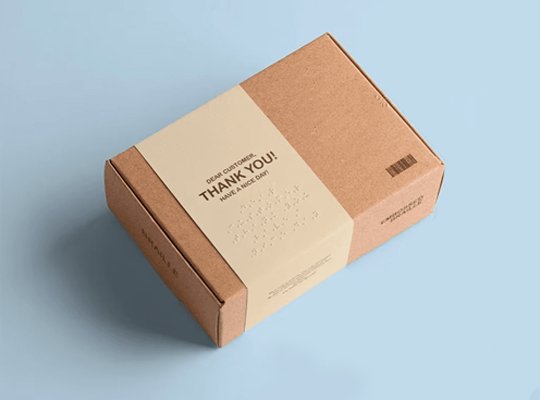
Ecommerce packaging inserts in plain language
Shopify describes package inserts as additional items placed in ecommerce shipments before they go to customers. That includes marketing pieces such as offers, thank-you notes, instructions and samples. Read Shopify’s overview of packaging insert types.
Packaging buyers also use the word insert for a fitted paperboard, molded pulp, corrugated or plastic part that holds the product inside a box. These two meanings should not be mixed during quoting.
| Insert type | Main job | Example |
|---|---|---|
| Structural insert | Holds products in a fixed position | Die-cut paperboard platform for a jar and tube |
| Divider | Separates several products | Cells between candles or bottles |
| Thank-you card | Adds a short brand message | Flat card placed above the product |
| Care or instruction card | Explains use, care or assembly | Skincare routine or garment-care card |
| Promotional card | Encourages a repeat order | Discount code or referral offer |
| Sleeve or belly band | Bundles or brands an existing pack | Printed band around apparel or a plain box |
| Return or support card | Directs the customer after delivery | QR code or support instructions |
Choose the insert from the job it must do
If the product moves, tips or touches another item, start with a structural solution. A card cannot replace protective packaging. If the product is already protected and you only need communication, use a flat printed piece.
For fragile or heavy products, design the insert before the outer box. Product dimensions, weight, center of gravity and opening direction affect the cutouts and support points. Compare paper inserts vs plastic trays when material choice is still open.
For a message card, decide one useful action: explain care, show setup, say thank you or point to support. Trying to fit every brand story and promotion onto one small card usually creates unreadable artwork.
Compare common printed pieces
| Printed piece | Useful when | Watch point |
|---|---|---|
| Flat card | One short message or QR code | Keep text large enough to read |
| Folded card | Several instructions or languages | Adds folding and packing steps |
| Booklet | Detailed use or compliance information | Needs page order and binding checks |
| Belly band | Holds a product bundle or brands a stock box | Requires accurate circumference and overlap |
| Full sleeve | Adds more printed coverage around a tray or box | Can increase material and assembly time |
| Sticker or label | Seals tissue or identifies a SKU | Confirm adhesion and application position |
If you are deciding between the last three formats, see packaging sleeves vs belly bands.
Size inserts around the product and box
A structural insert changes the internal space of the box. Confirm the product sample and insert layout before final artwork. Even a few millimeters can change how a jar neck, pump, cap or accessory sits.
For loose cards, choose a size that fits the box without curling at the edges. A card placed above the product should not cover an important opening feature or create pressure on a fragile surface. If the card sits in a pocket, slot or envelope, include that holder in the dieline review.
Use one orientation and placement instruction for every order. For example: “Place the care card face up above the tissue, with the logo toward the box hinge.” A simple photo is often clearer than a paragraph.
Choose paper and finishes for handling
Kraft paper can support a natural look, while white coated card gives brighter color and sharper small text. Uncoated paper is easier to write on. Lamination can protect a frequently handled instruction card, but it may be unnecessary for a simple thank-you card that is read once.
Foil, embossing and spot finishes add setup and approval steps. Use them on a piece the customer will notice and keep. For a low-cost first order, spend the budget on clear print, accurate cutting and reliable packing before decorative finishes.
Review packaging finishes and printing options before selecting a surface treatment.
Plan ecommerce inserts for packing and fulfillment
An insert is not complete when it leaves the printer. It must arrive at the packing station, stay associated with the correct SKU and be placed consistently.
Prepare a pack-out sheet showing:
- Insert name and revision
- SKU or product set that receives it
- Quantity per order
- Placement and orientation
- Barcode, QR code or promotion expiry check
- What the packer should do with damaged or missing pieces
When products are packed in China, confirm whether cards arrive bundled in pack-out order or need sorting. A mixed carton of several card versions creates avoidable mistakes. The product packing service in China page explains where packaging production, product collection and packing can meet.
Control cost without creating packing problems
Insert cost includes more than the printed piece. Cutting, folding, sorting and placing every component add labor. A low-cost card that creates an extra manual decision in every order may cost more operationally than a clearer single piece.
Keep the first version simple:
- Use one stock or practical custom size.
- Print one or two sides rather than adding unnecessary folds.
- Combine messages when the combined card remains readable.
- Keep SKU versions visually distinct for packers.
- Confirm reorder quantities before the first promotion expires.
Common mistakes to avoid
- Calling both a fitted tray and a thank-you card an “insert” without clarification.
- Finalizing the box before the structural insert layout.
- Adding several loose cards with no packing order.
- Using tiny text or a QR code that has not been tested at final print size.
- Applying foil or lamination where a simple readable card would work.
- Forgetting that a promotion or language version may change before all stock is used.
What to send for an insert quote
- Product dimensions, weight and photos
- Finished box dimensions or dieline
- Structural insert or printed-card requirement
- Insert quantity per box
- Paper and finish preference
- Artwork status and number of versions
- Placement photo or pack-out sketch
- Total order quantity and reorder plan
- Destination and packing location
For structural components, compare custom paper inserts. For a complete ecommerce route, review Shopify packaging from China or request a quote.
FAQ
What are ecommerce packaging inserts?
They are components added inside an ecommerce order. Some protect or position the product, while others provide instructions, care details, offers or a thank-you message.
Is a thank-you card the same as a box insert?
It is a type of printed package insert, but it is not the same as a fitted structural insert that holds a product in place. Clarify which meaning you need when requesting a quote.
Which insert should protect a fragile product?
Use a fitted structure such as paperboard, corrugated, molded pulp or another tested material appropriate for the product and route. A loose printed card does not provide meaningful impact protection.
How many printed inserts should an ecommerce box include?
Use the fewest pieces that deliver the required information and customer action. One clear card is often easier to pack and more likely to be read than several overlapping pieces.
Can ecommerce inserts be packed with products in China?
Yes, when the products, insert versions, placement instructions and quality checks are confirmed before pack-out. Supply a photo or diagram for every SKU configuration.